


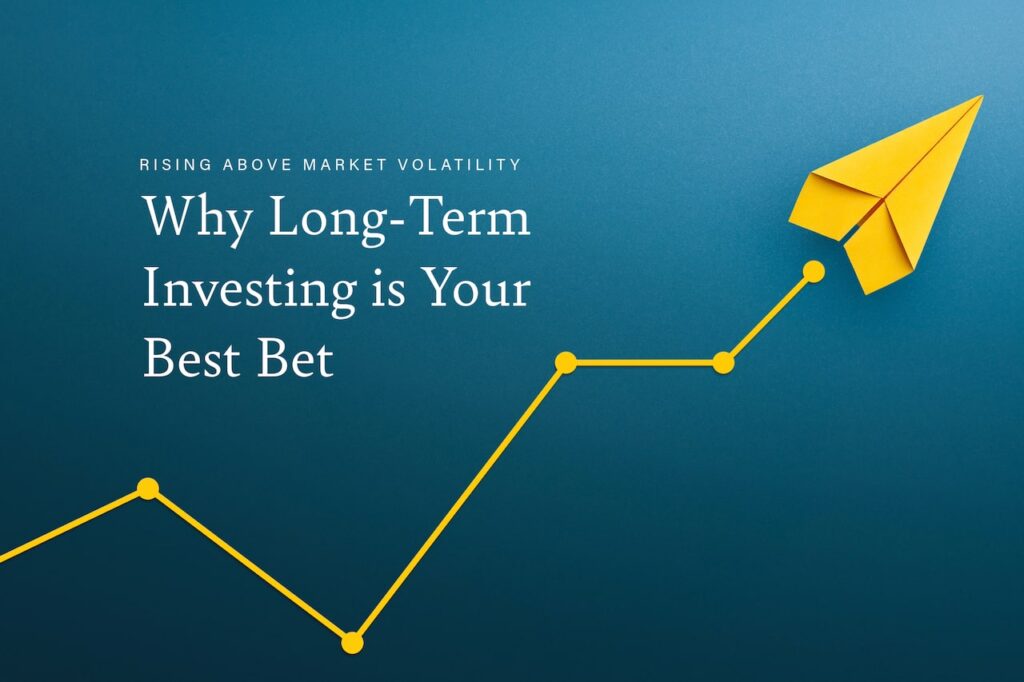
Embracing Stability in an Unpredictable Market: The Advantages of Long-Term Investment Strategies
Market volatility is an inescapable aspect of investing. It is characterized by sharp price fluctuations and unpredictable financial markets – and every investor is impacted by it. While such volatility can be unsettling, adopting a long-term perspective in your investment strategy can help you navigate through this uncertainty. This article discusses why a long-term approach to investing might be beneficial in your efforts toward overcoming market volatility.
Understanding Market Volatility
Market volatility refers to the rate at which the price of securities increases or decreases for a given set of returns. It is often driven by factors such as economic data, geopolitical events, changes in market sentiment, and macroeconomic trends. Volatility is not inherently bad; it is a natural part of the stock market cycle, but it can influence investor behavior.
The Case for Long-Term Investing
If you’re not sure whether this approach to overcoming market volatility is right for you, here are a few considerations to keep in mind:
Compounding Returns
Investing with a long-term perspective allows you to take advantage of compound interest. This is where the returns on your investments generate their own returns. Over time, compounding can potentially lead to exponential growth of your investment portfolio, even if the initial capital or the periodic additions are not very high.
Smoothing Out Volatility
By staying invested over a longer period, you reduce the impact of short-term volatility on your investment portfolio. Historical market data often shows that while markets can be highly volatile over short periods, they tend to produce more stable and positive returns over longer periods. Long-term investing helps mitigate the risks of reacting emotionally to temporary market downturns so that you are overcoming market volatility in rational ways.
Emotional Stability
Speaking of reacting emotionally, short-term market fluctuations often trigger emotional responses that lead to poor investment decisions, like selling at a loss during a downturn. A long-term focus shifts attention away from these fluctuations and towards overall growth trends, helping investors avoid making decisions based on short-term distress.
Strategic Asset Allocation
Long-term investing allows for strategic asset allocation that aligns with your financial goals, risk tolerance, and time horizon. It involves distributing your investments across different asset classes (stocks, bonds, real estate, etc.) to optimize your return potential relative to your risk preference. This diversification can help absorb shocks from market volatility.
Lower Transaction Costs
Investing for the long term typically involves fewer transactions. This means lower incurred costs related to trading, such as commissions and taxes on capital gains. Frequent trading can erode a significant portion of your investment gains through these costs, and this is important for investors to remember.
Implementing a Long-Term Investment Strategy for Overcoming Market Volatility
To effectively implement a long-term investment strategy, consider the following steps:
Set Clear Financial Goals
Define what you are investing for, whether it’s retirement, buying a home, or funding education. Determine your “why” to help remain motivated and strategic. Clear goals help you determine the right investment strategy and time horizon.
Choose Suitable Investments
Select investment vehicles that align with your goals and time frame. For longer-term goals, equities might be more appropriate due to their potential for higher returns over time, though every investor’s needs and goals are unique.
Regular Reviews and Rebalancing
While it’s important to maintain a long-term view, regular reviews of your investment portfolio are crucial to ensure it remains aligned with your objectives and risk tolerance. Rebalancing helps maintain your desired asset allocation.
Stay Informed
Keep yourself informed about changes in the financial markets and economic conditions but avoid making hasty decisions based on short-term market movements.
Do You Have Strategies in Place for Overcoming Market Volatility?
Navigating and overcoming market volatility effectively requires patience, discipline, and a well-considered long-term investment strategy. By focusing on the bigger picture, you can potentially reduce the stress and uncertainty associated with investing and place yourself in a better position to achieve your financial goals. Remember, while short-term market movements can be unpredictable, the principles of long-term investing remain a cornerstone of personal financial growth.
Illuminated Advisors is the original creator of the content shared herein. I have been granted a license in perpetuity to publish this article on my website’s blog and share its contents on social media platforms. I have no right to distribute the articles, or any other content provided to me, or my Firm, by Illuminated Advisors in a printed or otherwise non-digital format. I am not permitted to use the content provided to me or my firm by Illuminated Advisors in videos, audio publications, or in books of any kind.